Practical AI · 3-minute read
There is often one person who knows where everything lives, why the spreadsheet has that extra column and which supplier needs a second phone call. Their official title rarely includes ‘human search engine.’ Their day does.
The aim is to give that person fewer interruptions and everyone else a dependable place to start. Buying a chatbot before capturing the knowledge mostly gives the questions a new receptionist.
Capture one job while it happens
At Tule Basin Field Services, a fictional oilfield maintenance business, Rosa handles the office paperwork for completed jobs. Coworkers repeatedly ask which documents belong in a closeout packet. This example concerns administration, not field safety or equipment operation.
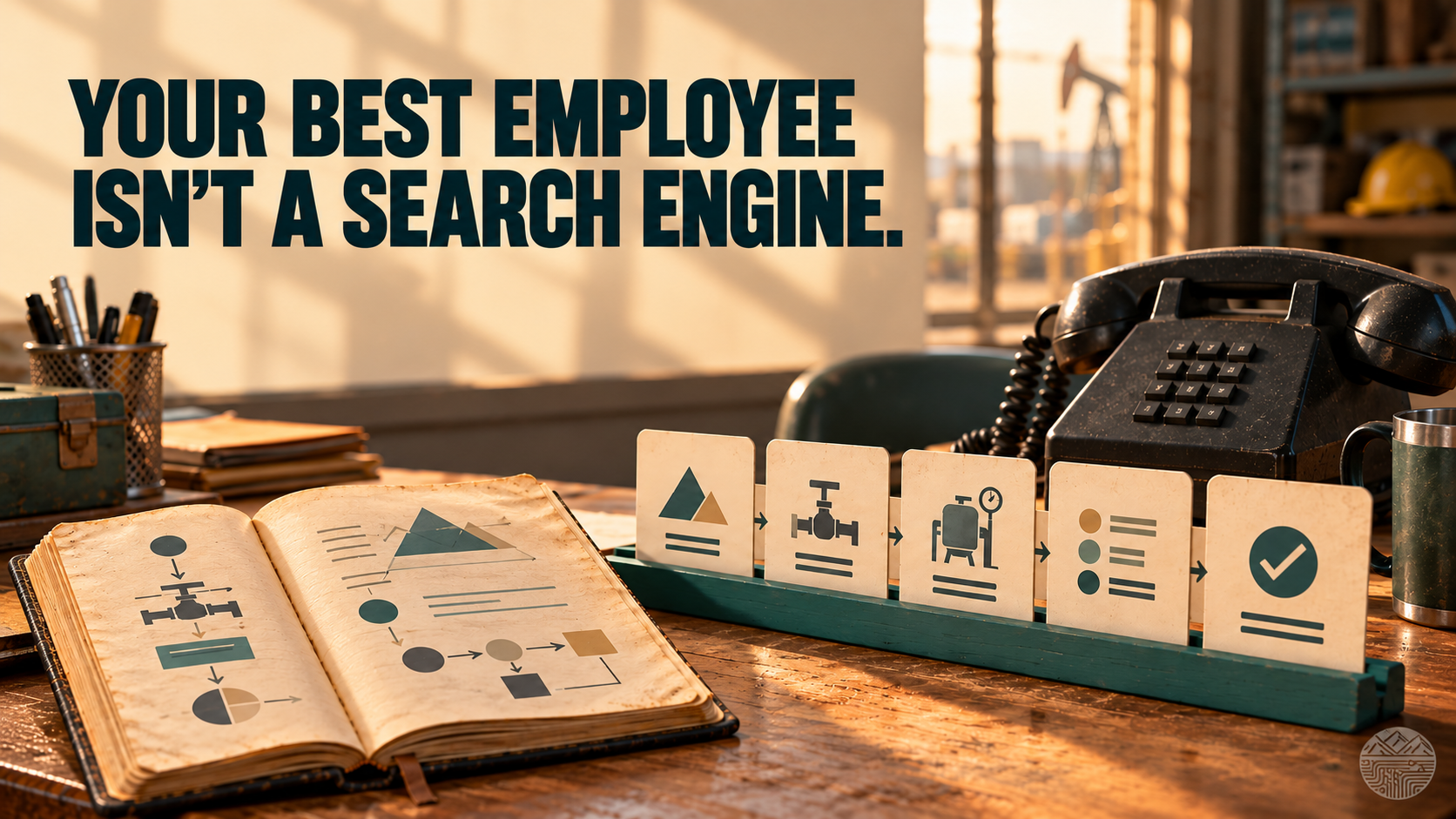
Rosa walks through one fictional packet while a colleague takes notes. They capture the trigger, required inputs, sequence, source documents and what ‘complete’ means. Then they ask about exceptions: What if the customer reference is missing? What if a signed page is unreadable? Who resolves a disagreement?
Those questions matter because an expert’s shortcuts can disappear during transcription. ‘Check the usual folder’ is perfectly clear to the person who created the folder twelve years ago. Everyone else would appreciate an address.
Use AI to organize the explanation
Turn these approved walkthrough notes into a draft procedure for [task and role]. Include the trigger, required inputs, numbered steps, completion check, exceptions, source locations and questions for the process owner. Distinguish current practice from suggested improvements. Mark unsupported details ‘Confirm with owner.’ Do not invent approvals, technical instructions or company policy. Notes: [fictional or approved notes].
The tool can also produce a short question list for a follow-up conversation. If the notes contradict an existing policy, keep both visible until the owner resolves the conflict. An undocumented workaround should not become official because AI gave it a heading.
Let another person try it
The process owner first checks the draft against actual practice and approved requirements. Then a colleague with the required training uses it on a fictional or low-risk sample. Record every place they need to ask a question. Revise those steps before releasing the procedure.
EPA’s guidance on preparing standard operating procedures recommends knowledgeable authors and review by people familiar with the process, including testing by someone other than the writer. That is a useful quality principle beyond its original setting. [1]
Give the approved procedure an owner and review trigger, such as a system or policy change. Put it where the team already works and check access. Do not include passwords or unnecessary customer details. Ask staff from different shifts to check whether it describes their reality too.
If you later add AI search, point it at approved material and require source links. First, make the instructions worth finding.
Your turn: What question does your most knowledgeable coworker answer so often that it deserves its own instructions?
Source [1]: EPA: Guidance for Preparing Standard Operating Procedures, sections 2.1–2.2. The company, workflow and prompt are original examples; this is not oilfield safety guidance.